Technical expertise and permission to reach a terminal location are separate things. An airport feedback program needs both. Plan the physical service visit with the same care as the technical work.
This is a lifecycle responsibility, not a go-live acceptance gate or a dashboard-access policy. Equipment already in service may need an approved inspection, relocation, or planned replacement.
A maintenance-access plan helps the airport coordinate those visits without improvising around its security rules or the passenger journey. It makes local responsibilities explicit before a service window is booked.
Separate remote work from physical work
Start by identifying the approved task. Can the relevant technical team complete it remotely through authorized channels? Does someone need to inspect or handle equipment at the location?
Do not assume that a remote support arrangement grants permission to enter the terminal area. Equally, a person allowed into the area may not be authorized or trained to perform the technical task.
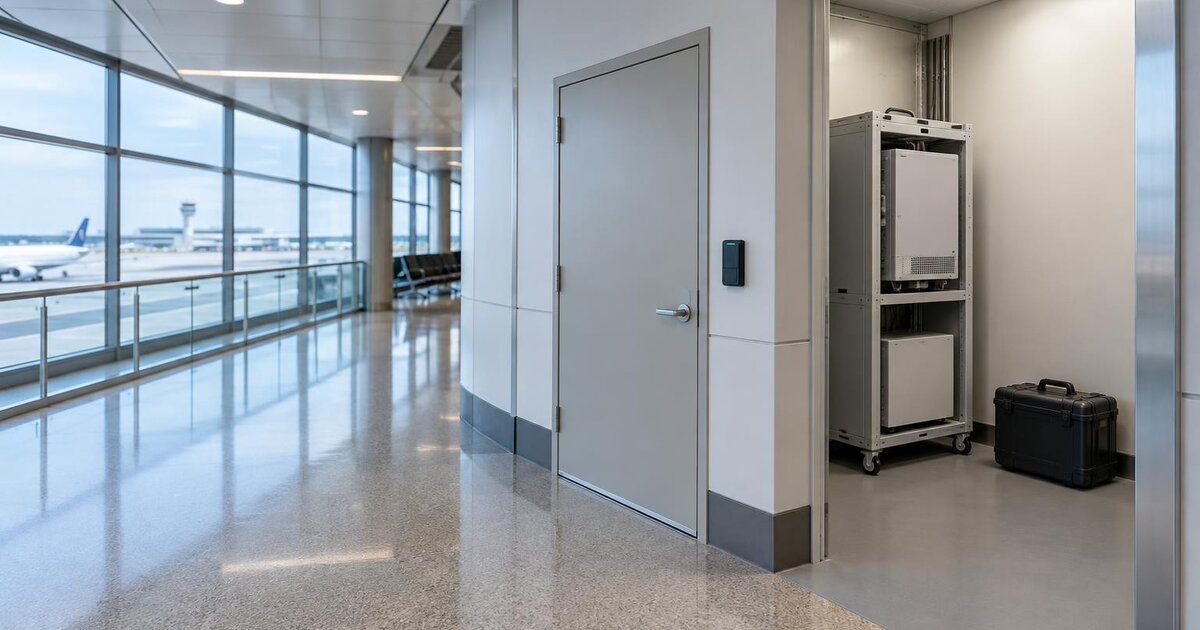
Consider an illustrative airport planning a routine feedback-device stand replacement beyond a controlled access point. The replacement part, qualified technician, and local permission need to come together in one service window.
The planning question is specific: who can carry out this approved task, at this location, under the airport's current access arrangements?
Let the airport define the access route
In the United States, 49 CFR Part 1542 addresses airport security, including identification systems and escort procedures. Requirements depend on the applicable security program and area; this article is not a universal badging guide.
For every location, ask the airport's authorized security contact to define the applicable process. Outside the United States, use the relevant local requirements and airport procedures.
A vendor appointment is not an access authorization. Do not describe a contractor as cleared until the airport's process confirms the appropriate status for the actual visit.
Keep sensitive security details in the airport's approved system. The operational planning record should reference the responsible contact and process, not reproduce restricted instructions in a shared service note.
Keep approval and availability separate
An approved escort arrangement still needs a person available at the agreed time. A technician's travel booking does not reserve that person's attention.
Confirm availability through the airport's process before finalizing the service window. If circumstances change, reschedule through authorized channels rather than seeking an informal workaround.
Prepare a task-specific service pack
Give authorized participants the information needed for the work: the equipment reference, the approved task, the necessary parts, and the person who can accept completion. Keep distribution appropriate to each role.
For the illustrative stand replacement, confirm whether the work also involves facilities, electrical, or other local approvals. Do not assume that a small physical change falls outside those processes.
Agree how the area will be managed while work takes place. The airport should determine how to protect passenger movement and maintain any required access routes.
Define what is outside scope. A routine replacement should not become an unapproved move to a different passenger touchpoint simply because the new position looks convenient.
Make the visit decision before the journey
A short pre-visit confirmation can check that the task is still required, the location is available, the parts are ready, and the local arrangements remain valid. Name the person responsible for that check.
Where a condition is not met, make a deliberate decision. Proceed within the approved scope, postpone the visit, or seek the required authorization for a revised plan.
Plan a safe stopping point
Agree what the technician should do if the planned work cannot be completed within the authorized window. Follow the airport's instructions for leaving the area and equipment in an accepted condition.
This is not a promise that every visit will finish on time. It is a clear boundary around what happens when the operating situation changes.
Close the visit with local acceptance
Record what was actually completed and any remaining work. Have the appropriate local owner confirm the physical result and the relevant technical team confirm the agreed checks.
If testing is needed, identify it as testing. Do not blend service-check activity into passenger feedback without the approved handling for that data.
Update the maintenance record for the next visit. Preserve the equipment reference and the authorized change, without turning the record into a general repository of security information.
FeedbackNow's real-time experience focus belongs alongside this practical local discipline. A clear service-access arrangement helps the airport support its feedback touchpoints throughout their operating life.
Make the next visit easier to prepare
Capture practical lessons that can be shared safely: which role coordinated the appointment, whether the planned window was suitable, and whether the service pack contained the right equipment reference.
Do not copy access credentials or sensitive procedures into that lesson log. Its purpose is to improve coordination, not create an alternative route around the airport's current authorization process.
The Bottom Line
Airport feedback maintenance needs an access plan as well as a technical plan. Coordinate the task, permissions, local availability, service window, and acceptance. Keep every visit inside the airport's authorized process.
Explore FeedbackNow's approach to real-time airport experience insight.
Contact us to learn more about how FeedbackNow can help improve your customer experience and operations!