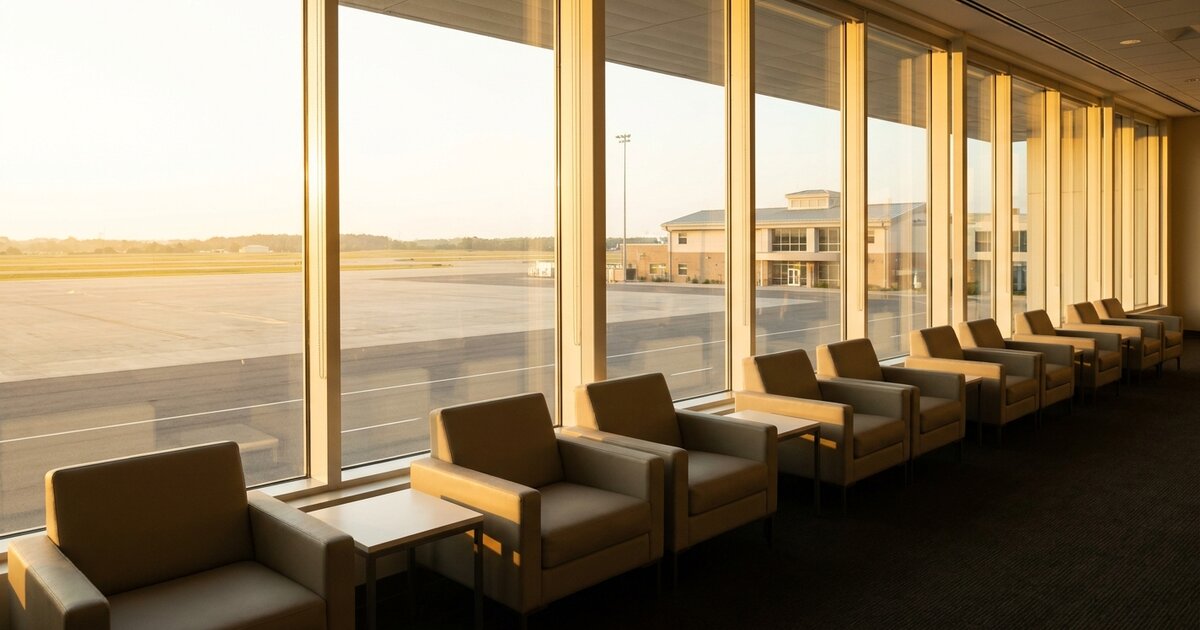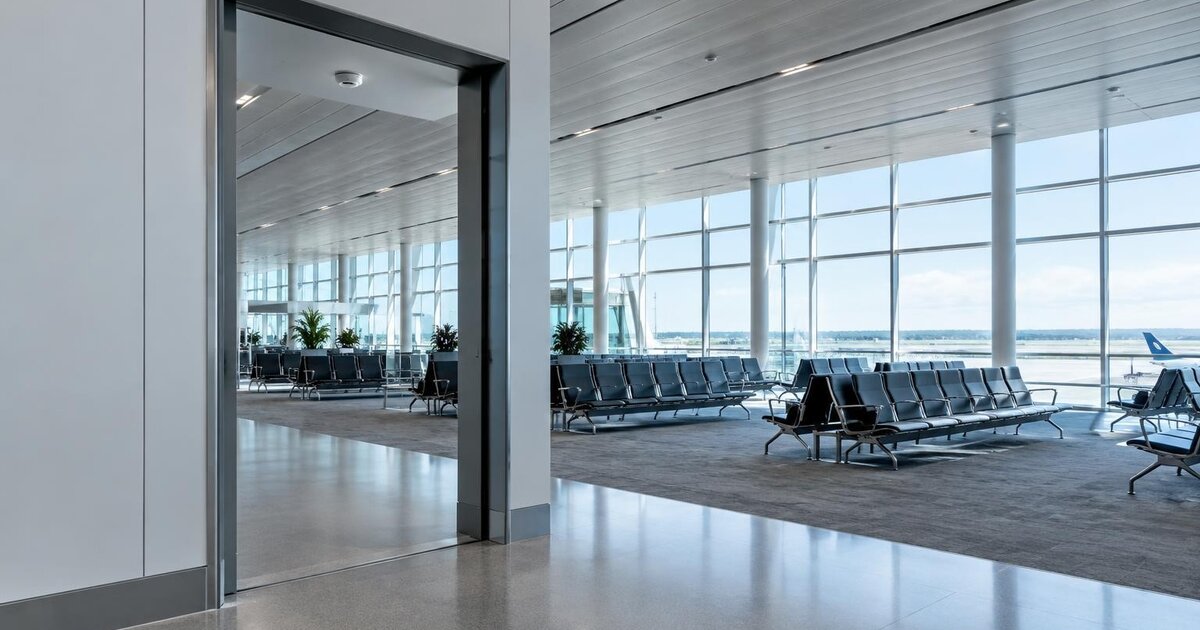
A people count needs a definition before it needs a dashboard. Crossing a doorway, entering a seating area, and occupying a space are different events. An airport should decide which event it wants to measure before comparing locations.
That is the purpose of a field-validation plan. It checks the meaning of the measurement itself, before a team asks how traffic relates to passenger sentiment.
Done carefully, this gives passenger feedback a better-defined context. It does not turn a traffic count into a passenger census or a satisfaction measure.
Write down the crossing event
Begin with a plain-language statement.
For this location, what counts as an entry? Where is the boundary? Which direction matters?
Distinguish movement from occupancy. An entry count should not be labeled as the number currently inside unless a separate, validated method supports that interpretation.
Consider an illustrative airport reviewing a restroom entrance and a high-ceiling gate area. The first has a defined doorway. The second may have several approaches and no obvious common boundary.
Those settings need different observation plans. A mounting position alone does not establish that both measurements represent the same event.
Create an observable reference
Minnesota's Department of Transportation describes manual counts as useful for identifying and validating volumes before automated equipment is installed. That guidance concerns outdoor bicycle and pedestrian counting, not airport sensor certification.
The transferable idea is a clearly defined observation. An airport can develop its own approved comparison procedure with the relevant technical and operating teams.
For a selected observation window, compare the system's recorded event with a manual tally of the same event over the same boundary. Synchronize the start and end times.
Document what the observer can and cannot see. The manual reference also has limits. A crowded view should not be treated as perfect simply because a person collected it.
Agree the method before seeing the result
Write the observation rules before collecting the comparison. Decide how observers will handle people who pause, reverse direction, or cross together.
Use the airport's approved privacy and security procedures. A manual tally need not identify individual travelers, and this framework does not require recording passenger images.
Test conditions, not only quiet minutes
For the illustrative restroom, include a period with ordinary individual crossings and a period when people arrive together. For the gate area, check whether the chosen boundary remains meaningful during boarding activity.
These are proposed test conditions, not claims that a particular technology will undercount or overcount. The point is to observe the actual installation under the conditions relevant to its intended use.
Record the physical arrangement and any changes between windows. A moved queue barrier or newly opened approach should not be invisible in the comparison record.
Avoid declaring one technology universally best. A result from one doorway, mounting arrangement, and operating period does not establish performance across every airport environment.
Define acceptance around the decision
The airport's technical and operational owners should agree what evidence is sufficient for the intended use. Do not import an arbitrary accuracy threshold from a different setting.
A broad planning discussion may need a different level of assurance from a specific operating trigger. Document the distinction rather than labeling the installation simply accurate or inaccurate.
Keep exceptions visible
Where a comparison needs further investigation, retain the observation notes. Check timing, boundaries, configuration, and the reference method before deciding what explains the difference.
Do not silently adjust the data until the charts agree. Any approved correction or configuration change should have a recorded reason and a new comparison where appropriate.
Connect passenger feedback only after matching scope
A feedback point and a people counter can describe nearby but different populations. A device at an exit may invite feedback from people who did not cross the counted entrance.
Match the location and time window before presenting the signals together. Label the result as traffic context beside voluntary feedback, not a response rate, unless the denominator genuinely supports that calculation.
Nor does the relationship prove why sentiment changed. Use it to form a better operational question, then inspect the setting and discuss the evidence with the responsible team.
Revisit validation when the physical boundary or intended decision changes. The record should identify where the result applies, not promise that one test covers the installation forever.
Publish a scope note with the operating view
Give supervisors a brief explanation of what the count represents. Include the boundary, direction, observation conditions, and the intended use accepted by the responsible teams.
If the gate area's multiple approaches remain outside the validated scope, say so in that view. The answer may be to refine the measurement plan rather than compare the gate total directly with a doorway count.
That note keeps a useful technical result from acquiring a broader meaning as it travels into a presentation. The operational decision should remain inside the scope that was actually checked.
The Bottom Line
Airport people counting needs a field-validation plan grounded in observable events. Define the boundary, compare like with like, record limitations, and approve the intended use. Then bring traffic context into the passenger-experience conversation.
Explore FeedbackNow's approach to airport experience insight and operational context.
Contact us to learn more about how FeedbackNow can help improve your customer experience and operations!