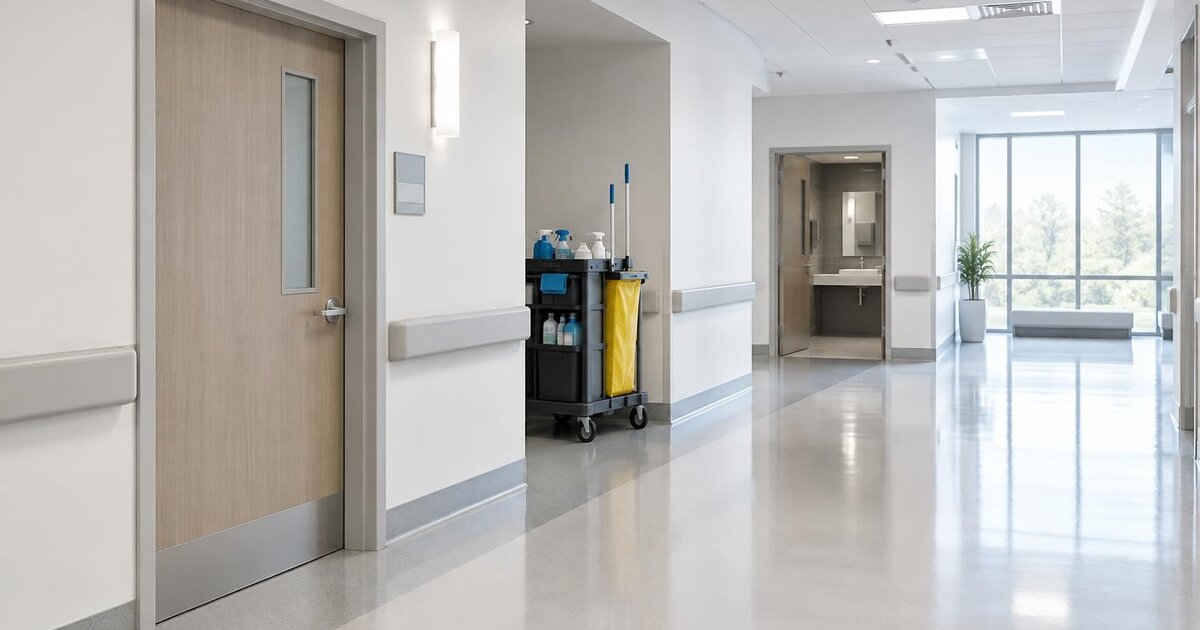
Patient experience and cleaning assurance belong in the same conversation. They do not answer the same question. A positive cleanliness rating is useful experience evidence, not permission to change a clinical cleaning requirement.
That distinction gives Environmental Services a stronger operating model. Keep the approved cleaning program intact. Add real-time feedback as a separate layer of context about what patients and visitors encounter.
The decision here is about evidence boundaries, not shortening cleaning rounds or proving a staffing return. Give professional judgment another useful signal while preserving clinical authority.
Define the evidence before defining the action
CDC's core infection-prevention practices include environmental cleaning and disinfection. They also call for monitoring adherence to infection-prevention practices and using standardized tools and definitions.
Those are professional assurance activities. A visitor's view of a restroom is an experience signal. Both can inform a supervisor, but one should not be relabeled as the other.
Build the review around that separation. Identify what the feedback asks about, where it was collected, and which team can interpret it. Keep cleaning-protocol evidence in its approved record.
This makes the feedback more useful, not less. Staff can see the additional context without being asked to treat it as a substitute for their established responsibilities.
Use two spaces to test the boundary
Consider an illustrative hospital with a public restroom near reception and an occupied patient room. The EVS lead wants better visibility into experience across both environments.
A concern from the public restroom can prompt an appropriate inspection under the hospital's process. The inspection establishes what needs attention and who should handle it.
A favorable rating from the patient room should not cancel a planned task or authorize a change to the room's cleaning procedure. The rating describes a perception, not completion of the required work.
Likewise, the absence of feedback should not be treated as a clinical clearance. Write this boundary into the operating guide before introducing any local feedback-based adjustment.
Keep clinical authority explicit
Ask the infection-prevention and EVS leads to identify decisions that remain outside the feedback workflow. Include decisions about approved methods, products, precautions, and completion requirements.
The blog's framework is an operational recommendation, not a cleaning protocol. Local clinical policies and appropriately qualified staff remain the authority for care-environment decisions.
Add experience context without changing the standard
A hospital should not derive those requirements from satisfaction scores or foot traffic alone. Keep the approved standard visible when discussing any operational signal.
Within that boundary, feedback can help the team investigate a visitor's experience. An inspection might identify a replenishment need, a maintenance concern, or an issue requiring another responsible department.
Use what staff actually find. Do not assume that a negative rating proves a cleaning failure or that a positive rating proves the environment meets every requirement.
Keep the records connected but distinct
For each experience concern reviewed, note the location, the observation made, and the operational follow-up. If a separate cleaning or infection-prevention record is required, use that established process.
A reference between records can help authorized reviewers understand the sequence. It should not turn the feedback entry into a certification that clinical work was completed.
Close the right question
The service question might be whether a reported dispenser concern was inspected and addressed. The assurance question might involve different evidence, definitions, and authorized reviewers.
Document the answer to each question in the appropriate place. A single green status should not silently stand for both patient experience and infection-prevention assurance.
Recognize good work with precise language
A supervisor can acknowledge attentive follow-up without claiming an infection outcome. A leader can report that experience concerns were reviewed without calling sentiment a compliance measure.
That precision supports a constructive discussion with EVS. It makes room for patient perception, direct observation, and professional standards without forcing them into one score.
For a team considering foot-traffic context, apply the same rule. Discuss what the count measures and what it does not establish before using it in any staffing conversation.
FeedbackNow's real-time experience focus can support that broader conversation. The hospital's responsibility is to define the boundaries and the authorized interpretation around it.
Check the language in the leadership pack
Before sharing results, review the labels attached to each measure. Use experience language for experience evidence and the hospital's approved terminology for professional assurance.
For example, a summary can say that visitors reported a concern and the team inspected the area. It should not say that a rating verified disinfection. Ask the EVS and infection-prevention leads to review any wording that might blur that distinction.
This creates a common vocabulary for the next discussion. Everyone can recognize the contribution of feedback without asking it to certify something it did not measure.
The Bottom Line
Hospital EVS feedback is most useful when its purpose is clear. Add patient and visitor context to the operating discussion. Preserve cleaning protocols, professional assurance, and clinical decision authority as distinct responsibilities.
Explore real-time experience insight for hospital operations with FeedbackNow.
Contact us to learn more about how FeedbackNow can help improve your customer experience and operations!