Trust is not a survey category. It is an accumulated judgment, built from responsiveness at dozens of small moments: the call button answered quickly, the room cleaned on time, the update delivered before it was asked for.
Get those moments right consistently, and clinical excellence is reinforced by an experience patients can trust. For hospital leaders, that creates an operational opportunity: responsiveness and coordination can be measured, managed, and improved in real time.
Responsiveness Is a Timing Metric Hiding Inside a Satisfaction Score
When patients rate a hospital poorly on communication or attentiveness, the underlying experience often involves a delay: a call button unanswered, a question unaddressed, or a concern raised without timely acknowledgement.
Formal surveys can capture that a patient experienced a problem. They do not necessarily show how long the issue lasted or whether it was resolved before the patient's next interaction.
Real-time feedback adds that operational context. A signal at the touchpoint — the room, the unit, or the discharge desk — creates a timestamp when dissatisfaction occurs. That timestamp becomes the beginning of a responsiveness metric hospitals can manage: time from signal to acknowledgement and time from acknowledgement to resolution.
The value of that timestamp increases when it is tracked at the unit level rather than only at the hospital level. Two units can produce similar overall communication scores while resolving concerns at very different speeds.
A hospital-wide average can obscure that difference. Unit-level responsiveness data can surface it and help teams identify specific, actionable factors — staffing patterns during a particular shift, a call-button routing issue, or a unit that recently changed its rounding schedule.
Better Routing Strengthens Coordination Between Teams
Patient experience often depends less on the performance of one team than on the coordination between teams — nursing and environmental services, day shift and night shift, or the care team and discharge planning.
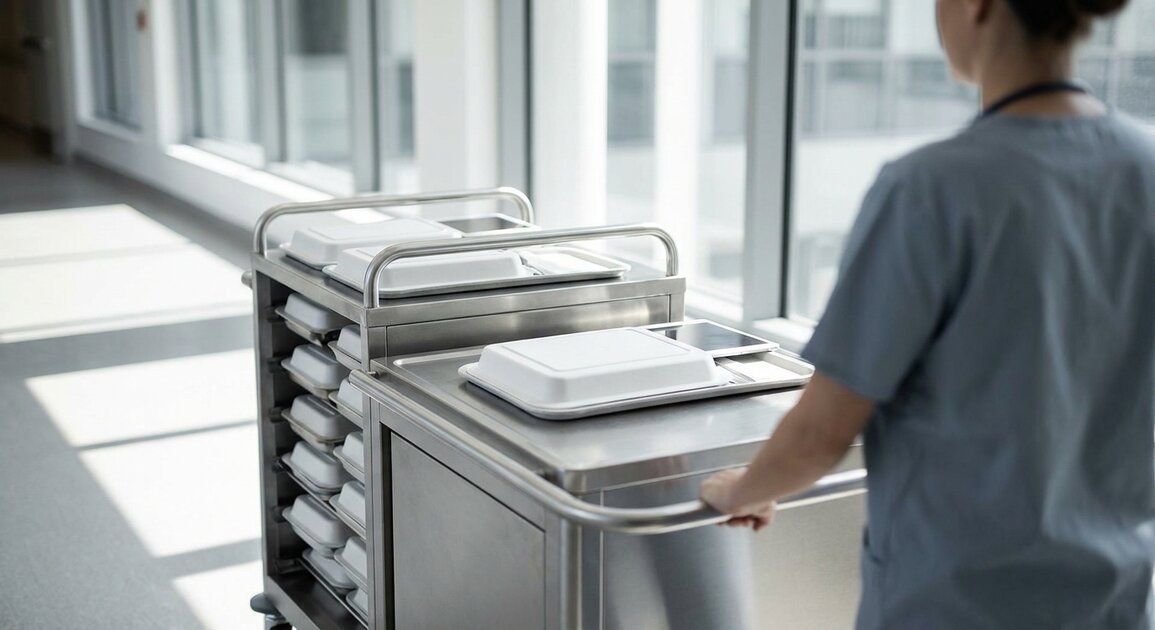
A used tray left in a room, for example, can reflect a coordination gap rather than the performance of a single department. The operational question becomes simple: who owns the signal, and how quickly can it reach them?
Location-tagged, real-time feedback can route a concern to the team accountable for that specific issue at that specific moment, rather than sending it to a general queue that requires additional triage. Automatic routing makes ownership clearer and helps teams respond faster.
This matters most when a patient's experience involves multiple departments at once. A patient waiting for discharge paperwork while another operational need is being addressed may experience the situation as one continuous wait. Routing concerns separately to the appropriate teams gives each department visibility into its own responsibility and helps create a more coordinated experience for the patient.
Consistent Responsiveness Builds Trust
A single fast response does not build trust. Consistency does.
Consistency across the full patient journey matters because every interaction contributes to the overall experience. Real-time feedback helps protect that consistency by surfacing exceptions while there is still an opportunity to address them during the same stay.
There is a widely observed pattern in healthcare operations: units where staff have clear ownership and timely feedback on their work tend to deliver more consistent patient experiences. Teams that receive fast, specific feedback signals have more opportunities to act on them shift after shift, rather than discovering recurring patterns later through aggregate scores.
The result is a tighter connection between what patients experience and what operational teams can improve.
Shift-Level Visibility Turns Feedback Into Action
A hospital or health system using this model does not necessarily need to add headcount to improve responsiveness. Instead, it changes what existing teams can see and when they can see it.
A nurse manager might start a shift with a short list of open signals from the prior eight hours — not simply an overall satisfaction score, but specific, located concerns. That could include a call light response that needs review or a family member who flagged confusion about a care plan on the surgical floor.
Each item can have an owner, a timestamp, and a resolution status. This gives teams an opportunity to address concerns while they are still small and specific, rather than allowing them to accumulate into a broader impression of not being heard.
Real-time visibility also creates accountability without requiring teams to wait for a monthly or quarterly patient experience report. Staff can see where attention is needed during the same operational cycle in which the issue occurred.
Three Responsiveness Metrics Make the Business Case
Three numbers can turn responsiveness from an abstraction into something leadership can act on: median time from signal to acknowledgement by unit, percentage of concerns resolved within the same shift, and the number of handoff-related signals involving more than one team and how quickly they reach the appropriate owner.
None of these metrics requires waiting for a traditional survey cycle. They can be available the same day the signal occurs and provide operational context around responsiveness and coordination.
Presented together, these measures tell leadership something an overall satisfaction score cannot: where operational friction sits and how effectively teams are responding to it.
A unit with a strong overall satisfaction score but slower handoff routing, for example, may have an opportunity to strengthen coordination before higher patient volumes put additional pressure on the process. Real-time responsiveness data makes those opportunities visible earlier and gives teams a chance to act.
The Bottom Line
Trust is not created in a single exceptional interaction. It is built through consistent responsiveness across small moments and handoffs between teams.
Real-time feedback makes that responsiveness visible and actionable while the patient is still in the building, helping consistency become an operating habit rather than a hope.
See how hospitals turn responsiveness into a measurable operating standard
Contact us to learn more about how FeedbackNow can help improve your customer experience and operations!