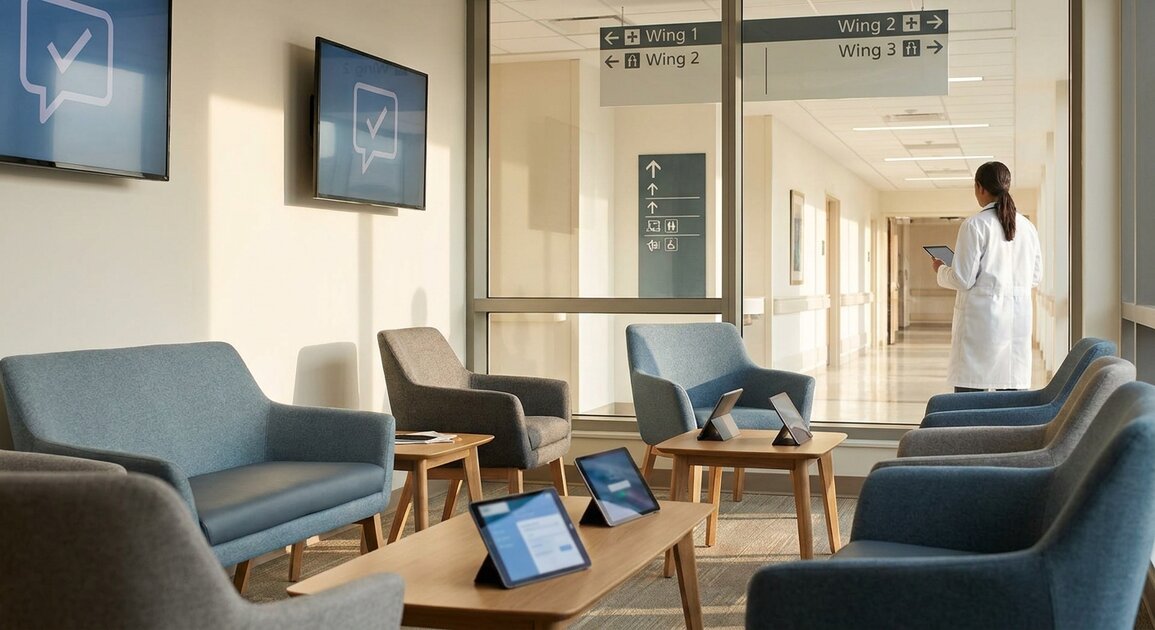
Meal service is a care touchpoint. It is also a live operating signal. A meal can arrive on time and still miss the mark. The order may be wrong. A patient may need help opening a package. A diet restriction may change the handoff. The signal matters while the experience is still happening.
For hospital operations leaders, the opportunity is larger than food satisfaction. It is a clearer view of how patient demand, staffing, and service routines intersect. Real-time feedback can add that view without replacing clinical judgment or existing food safety processes.
Meal service shows where a routine meets a real person
Meals touch many teams. Food and nutrition services prepares and dispatches them. Nursing teams coordinate around clinical needs. Environmental services maintains the room. Support staff may help with delivery or setup. Each role sees a portion of the experience.
A standard report can show a recurring pattern after the shift. It may not show which meal period, corridor, or step created friction. A patient signal captured in the moment gives the operating team more context. It points to a time, a place, and a specific service moment.
A large hospital system might meet its target delivery window most days and still hear about order checks or delays connected to isolation protocols. Those are not the same issue. They need different owners and different responses. A time-stamped signal helps separate them.
CMS describes HCAHPS as a national survey of patients' perspectives on hospital care. More than 4,400 hospitals participate, and nearly two million patients complete HCAHPS each year. CMS explains the HCAHPS program and its scale. That public measure supports comparison. Meal operations still benefit from a closer, more specific view of the service itself.
Separate timing, accuracy, and experience signals
One score rarely tells a team what to do next. A useful meal-service feedback design separates distinct signals: delivery timing, order accuracy, food temperature or quality, staff assistance, and overall experience. Keep the choices short. Make them understandable at a glance.
Do not ask patients to diagnose the workflow. Give them a clear way to report the moment. Then use operational context to interpret it. A response about a late meal means something different at lunch than at midnight. A comment about accuracy may call for a review of order confirmation, not a staffing change.
Feedback should be easy to provide. It should also be optional and respectful. Some patients will not want to respond. Others may need help or an alternative. A good system preserves choice and does not interrupt care.
Route the signal to the person who can act
Collection is only the first step. An operational loop defines who sees each signal, what threshold merits attention, and how the response is recorded. A timing concern can route to the food service lead. A room-specific request can reach the responsible support team. Clinical concerns stay with clinical staff.
The workflow should be simple enough to use during a busy meal period. An alert should include only what the recipient needs: location, time, issue category, and a response path. Avoid sending every signal to every manager. That creates noise instead of responsiveness.
Close the loop visibly. The recipient acknowledges the signal, takes the next appropriate step, and marks the action complete. FeedbackNow connects on-site feedback to operational alerts and follow-up, helping teams move from an observation to action in real time. The aim is not to promise every preference can be met. It is to make the next responsible action clear.
Use escalation rules that protect care priorities
Clinical needs come first. A service alert should never override a care plan, diet restriction, or infection prevention protocol. Define those boundaries before launch. Train service and clinical teams on which signals they own and when to escalate.
Learn the rhythm before changing the schedule
A single response should not trigger a major redesign. Patterns are more useful. Review meal-period trends by day, unit, and issue type. Look for repeated delays, recurring order questions, or locations that need a different handoff. Then validate the signal with the people doing the work.
This creates a practical test for staffing and process changes. If a recurring late-delivery signal is concentrated in a short window, leaders can examine dispatch timing and workload. If order accuracy concerns cluster around a specific handoff, teams can review confirmation steps. The data points to a place to investigate. Staff knowledge determines the right fix.
Use a consistent review cadence. A shift lead can scan active alerts during service. A department manager can review weekly patterns. A system leader can compare units monthly. Each level needs a different view. Local action should not wait for an enterprise report, and enterprise decisions should not depend on one anecdote.
Make improvement measurable without overclaiming
Start with measures teams can influence: time to acknowledge, time to respond, repeat signals by location, and the share of signals with a documented action. Pair those indicators with existing service measures, staffing plans, and patient experience results. Do not imply that a feedback tool alone improves clinical outcomes or satisfaction scores.
Before expanding, confirm the basics. Patients can understand the response options. Staff know who owns the signal. Location data is accurate. Managers can see whether the response was completed. These checks make the system useful and sustainable.
The best result is a calmer, more predictable service routine. Patients have a simple way to signal how the moment is going. Teams have a timely prompt to understand demand. Leaders gain evidence to improve the next meal period, not just explain the last one.
The Bottom Line
Hospital meal service generates operational information throughout the day. Capture it in the moment, route it to a clear owner, and use patterns to refine the next shift. Real-time feedback makes responsiveness visible while the experience is still happening.
Contact us to learn more about how FeedbackNow can help improve your customer experience and operations!