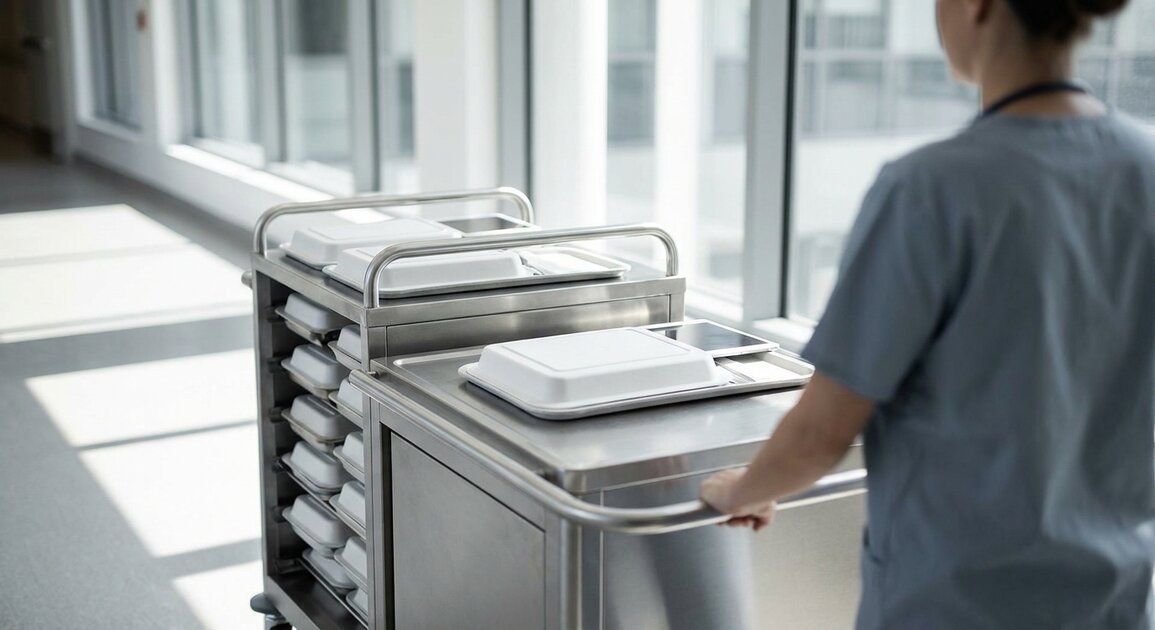
A meal tray is a touchpoint. Most hospitals still treat it like a logistics task.
Clinical care gets real-time attention. Nursing rounds happen on a schedule. Call lights get answered in minutes. Food service, by comparison, often runs on a delivery schedule with no feedback loop at all until a survey arrives weeks later.
That gap is not small. It is one of the most frequent touchpoints in a patient's entire stay, and it is largely unmeasured while it's happening.
Food Service Happens More Often Than Almost Anything Else
A patient sees a physician once or twice a day, if that. A patient interacts with food service two to three times a day, every day of a stay.
Frequency compounds. A single cold meal is forgettable. A pattern of cold meals, wrong substitutions, or trays that arrive at the wrong time becomes part of how a patient remembers the entire visit — regardless of how good the clinical care was.
A peer-reviewed study of hospital foodservice quality found that overall patient satisfaction scores fell below the industry benchmark in 75% of cases reviewed, with food quality scores moving inversely to the amount of food patients left uneaten (Nutrients/MDPI, 2024). When the food isn't right, patients notice — and they eat less.
The Feedback Loop Most Hospitals Are Missing
Most hospitals rely on one of two methods to learn about food service problems: a formal survey, weeks after discharge, or a patient calling the front desk to complain.
Neither reaches the kitchen in time to fix today's meal. Neither tells dietary services whether a substitution actually worked, whether portion sizes were right, or whether a specific unit is having a specific problem that another unit isn't.
By the time a survey response reaches a dietary manager's desk, the patient who reported the problem has likely been discharged. The information arrives too late to help the person who gave it.
What Real-Time Changes for Dietary Services
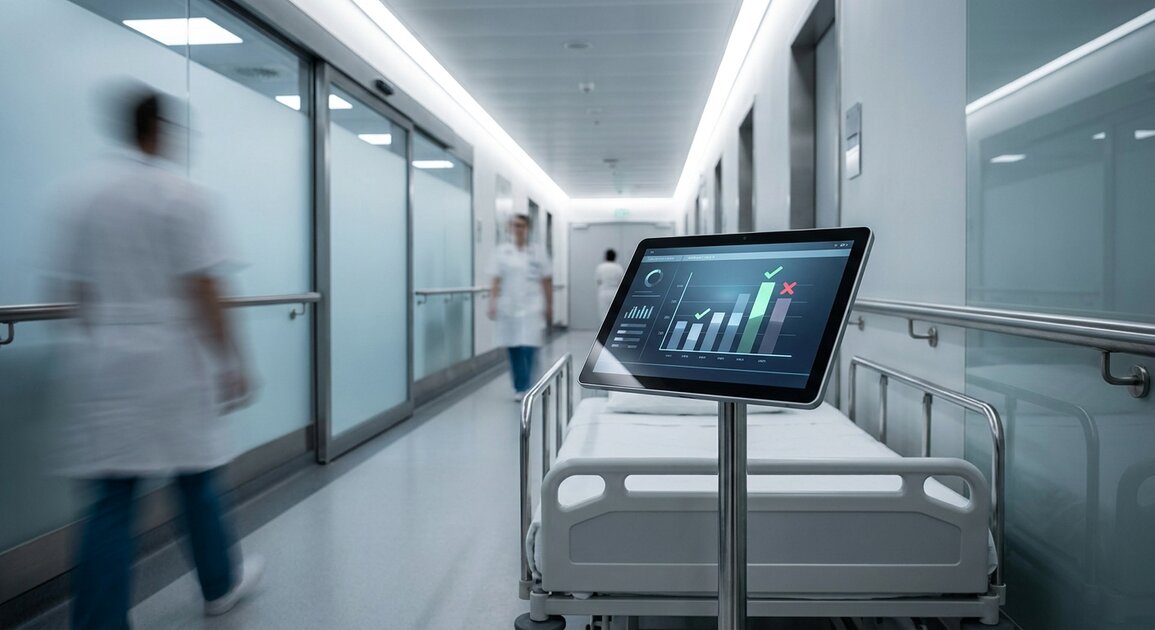
A feedback signal captured at the tray — a smiley-button device on the cart, a quick tablet prompt, a QR code on the tray card — changes who sees the problem and when.
Instead of a delayed survey response landing in a spreadsheet, a real-time signal routes directly to dietary services while the meal service is still happening. A pattern on one unit becomes visible in a shift, not a quarter.
In FeedbackNow customer conversations, hospital nutrition and food service leaders describe this exact gap: teams responsible for meal quality and delivery timing have no reliable way to know, in the moment, whether today's service on a specific unit is landing well — only whether a formal complaint eventually surfaces.
Cleanliness and Service Quality Travel Together
Food service experience is not just about the meal itself. It's about the tray table, the cafeteria for ambulatory patients and visitors, and whether the person delivering the meal engaged with the patient at all.
A real-time signal captured at these same touchpoints — a cafeteria kiosk, a tray-side prompt — gives food service teams the same operational visibility that housekeeping and nursing already have for their domains. Cleanliness, timing, and courtesy are all part of the same signal, and none of them show up in a quarterly survey soon enough to act on.
A Regional Medical Center's Version of This Problem
A regional medical center running food service across multiple units faces a version of this every single day. One unit's patients are consistently satisfied with meal timing. Another unit reports friction that never quite becomes a formal complaint — it just shows up as lower satisfaction scores with no clear cause attached.
Without a real-time signal tied to unit and mealtime, that difference is invisible until it's aggregated into a hospital-wide score months later, long after the pattern that caused it has changed or disappeared.
Why This Deserves the Same Standard as the Bedside
Hospitals have already accepted that real-time feedback belongs at the bedside for clinical and environmental signals. Food service has largely been left out of that shift, even though it touches every patient, multiple times a day, regardless of diagnosis.
Extending the same real-time standard to food service does not require new clinical infrastructure. It requires applying the same touchpoint logic — capture it in the moment, route it to the team that owns it — to a part of the patient journey that happens more often than almost anything else.
A Touchpoint Hiding in Plain Sight
Every hospital already has the moment. A tray arrives. A patient reacts. Right now, that reaction usually goes nowhere until a survey asks for it weeks later.
The Bottom Line
Food service is one of the most frequent touchpoints in a hospital stay — and one of the least measured in real time.
Bringing food service into the same real-time feedback standard as the rest of the patient journey turns a delivery schedule into an operational signal dietary teams can act on today, not next quarter.
See how real-time feedback covers every patient touchpoint →
Contact us to learn more about how FeedbackNow can help improve your customer experience and operations!