Passengers Do Not Experience an Airport as a Score. They Experience It as a Sequence of Rooms.
Security. Restroom. Gate. Each one is a different team, a different SLA, a different failure mode.
Most feedback programs treat them the same way anyway: one survey, one dashboard, one quarterly review. That is a measurement strategy. It is not an operations strategy.
A practical real-time program treats each touchpoint differently — because the response required is different at each one.
Security: The Signal That Has to Travel in Minutes, Not Days
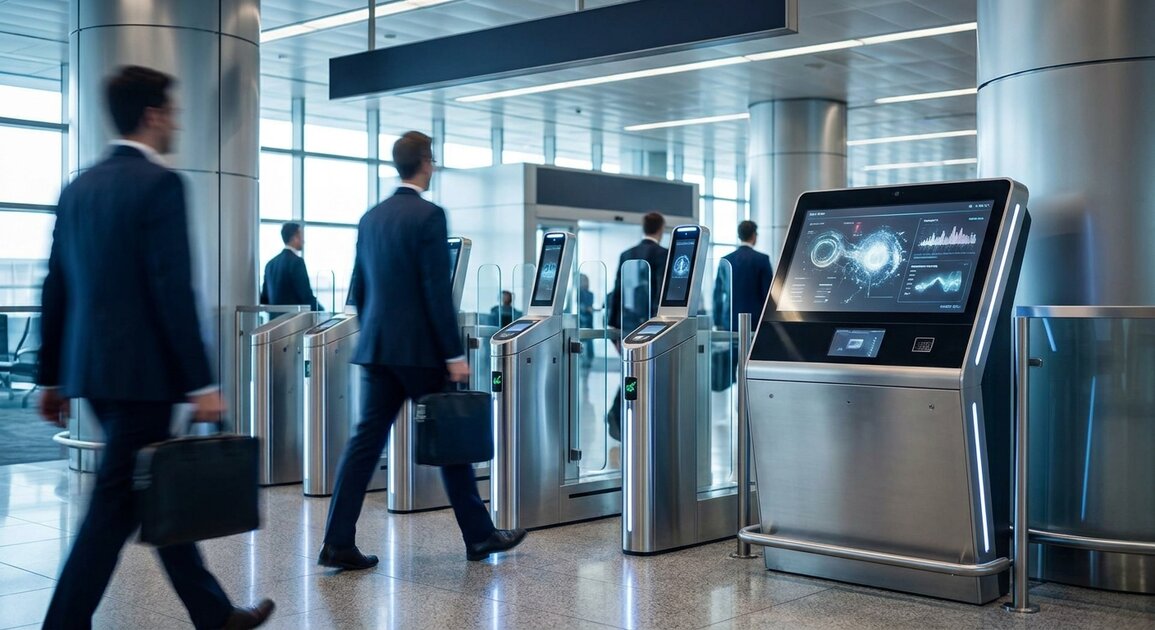
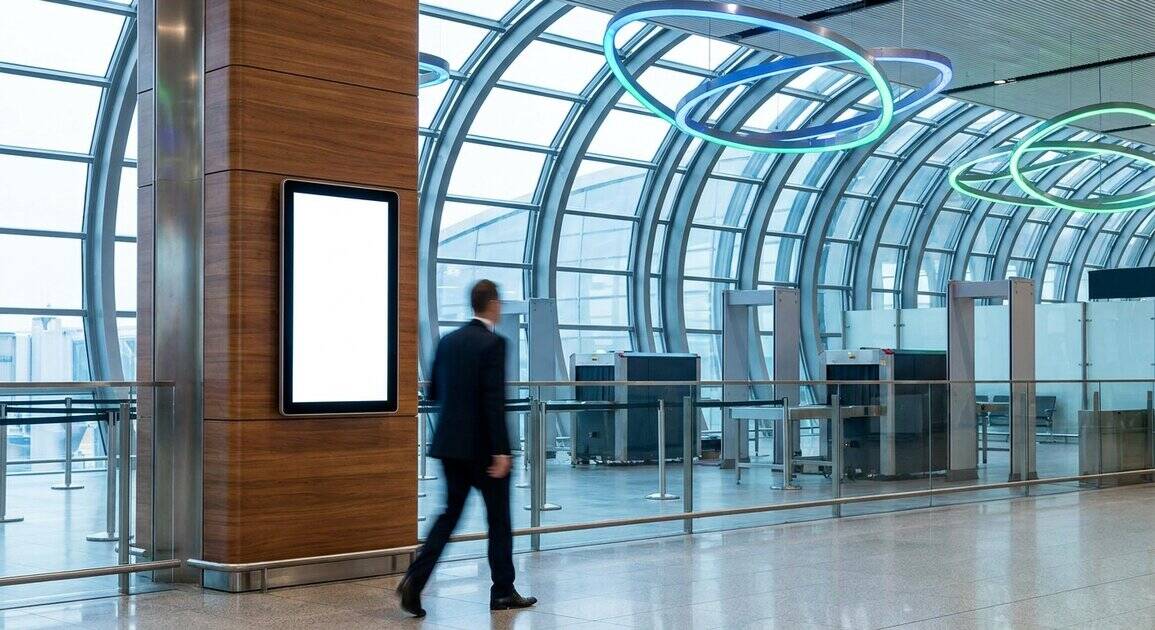
Security checkpoints do not degrade slowly. A single staffing gap or equipment slowdown can turn a manageable queue into a wall of frustrated passengers inside fifteen minutes.
79% of passengers say they are ready to use mobile digital identity to move faster through the airport (SITA, 2025) — which tells you exactly how little patience remains for a slow, opaque line.
What the playbook requires
A feedback point positioned at the queue exit, not the entrance. Location tagging by lane and checkpoint. And an alert threshold tuned to velocity — a rising rate of negative signal in a fifteen-minute window, not a daily average that arrives after the surge has passed.
When that alert fires, it has to reach the person who can open another lane or redeploy staff. Not a weekly ops report. The floor supervisor, now.
Threshold tuning matters as much as the alert itself. Set it too sensitive and the supervisor gets paged every time a single passenger has a bad morning — and starts ignoring the channel within a week. Set it too loose and the alert arrives after the queue has already spilled past the rope line. The right threshold is calibrated against a checkpoint's own baseline, not a system-wide average, because a checkpoint that normally runs lean will spike differently than one that already carries slack staffing. A mid-size hub airport that recalibrated thresholds by checkpoint, rather than applying one number terminal-wide, cut false-positive alerts by more than half while keeping real surges caught within minutes.
Restrooms: Where Cleanliness Shapes the Passenger Experience
Research into airport passenger satisfaction identifies terminal cleanliness as a critical driver of the passenger experience. One peer-reviewed study found cleanliness had the greatest effect among the conditions examined for passenger satisfaction. Restrooms are where that expectation gets tested most often, and most publicly. (Source: Sustainability - 2022)
The pressure can build quickly: a wide-body deplanes, hundreds of passengers move through in a short period, and a restroom that was clean at the scheduled cleaning round can be overwhelmed well before the next one.
What the playbook requires
Feedback buttons paired with entry counters, so cleaning intensity follows actual footfall instead of a fixed clock. Zone-specific tagging — this restroom, this concourse, this hour — so a dip in sentiment produces a work order, not a mystery.
Timestamped, location-specific data is also the single most useful artifact in a contractor conversation. It replaces a debate about effort with a shared record of outcome.
That shared record changes what a cleaning contract can specify. Instead of a schedule written around fixed rounds — every ninety minutes, regardless of demand — the contract can specify a response-time standard: a restroom flagged below threshold gets addressed within a set number of minutes, verified by the next passenger signal at that location. Airports that have made this shift report the same crew count producing a noticeably higher sentiment average, simply because effort follows footfall instead of the clock. The data also settles disputes before they start. When a contractor's invoice reflects rounds completed rather than conditions maintained, a timestamped sentiment record is the tie-breaker.
Gate Areas: Where Consistency Matters More Than Any Single Moment
A gate area is judged over the full dwell time, not one snapshot. Seating availability, noise, cleanliness and information clarity all compound across the wait.
Consistency across the full journey matters more than excellence at any single point — and gate areas are where that principle is easiest to violate. A gate that is calm at boarding call and chaotic thirty minutes earlier still produces a poor passenger memory.
What the playbook requires
Feedback capture throughout the dwell window, not just at boarding. Sentiment tracked against flight-load and delay data, so an operations team can see whether friction correlates with specific schedule patterns — and staff or communicate accordingly, before frustration compounds.
The most useful version of this pairing shows up during irregular operations. A delay announced at the gate produces a predictable sentiment dip — but the size and speed of that dip tells an operations team something a delay board cannot. A gate where sentiment recovers within ten minutes of an update is a gate where communication is working. A gate where sentiment keeps falling after the announcement is a gate that needs a second update, additional seating, or a staff member walking the row answering questions directly. Correlating gate-level sentiment against delay minutes, flight by flight, turns a subjective sense of "this gate handles delays well" into a pattern an airport can actually staff against.
What Good Looks Like in Practice
A mid-size hub airport running this playbook does not look like a control room full of screens. It looks like three narrow, fast loops running in parallel. At security, a supervisor gets a lane-specific alert and opens a second lane before the queue reaches the rope line. At the restroom nearest the widebody gates, an attendant gets a footfall-triggered task between scheduled rounds and clears it in under ten minutes. At a gate absorbing a ground-stop delay, an agent walks the seating area with an update before the sentiment dip has time to compound. None of these are dashboard events. Each is a single alert, routed to a single owner, closed within minutes. The airports that get this right do not talk about their feedback program as a measurement tool. They talk about it as part of how the floor runs — and the score turns out to be a byproduct of that, not the goal of it.
The Common Thread: Location, Speed, Ownership
Every touchpoint above needs the same three things in different proportions: precise location tagging, a response window measured in minutes, and a named owner who receives the alert directly.
Miss any one of the three and the program becomes a reporting exercise. A mid-size airport that deployed all three at once — security, restrooms and gate areas — moved from reactive callouts to scheduled, demand-based coverage inside a single quarter, according to internal FeedbackNow data.
That is not a better dashboard. That is a different operating model.
The Bottom Line
A passenger experience program is not one feedback strategy applied everywhere. It is a playbook — precise at security, zone-tagged at restrooms, dwell-aware at gates — with alerts that reach the person who can act while the passenger is still in the terminal.
See how airports operationalize real-time feedback at every touchpoint
Contact us to learn more about how FeedbackNow can help improve your customer experience and operations!