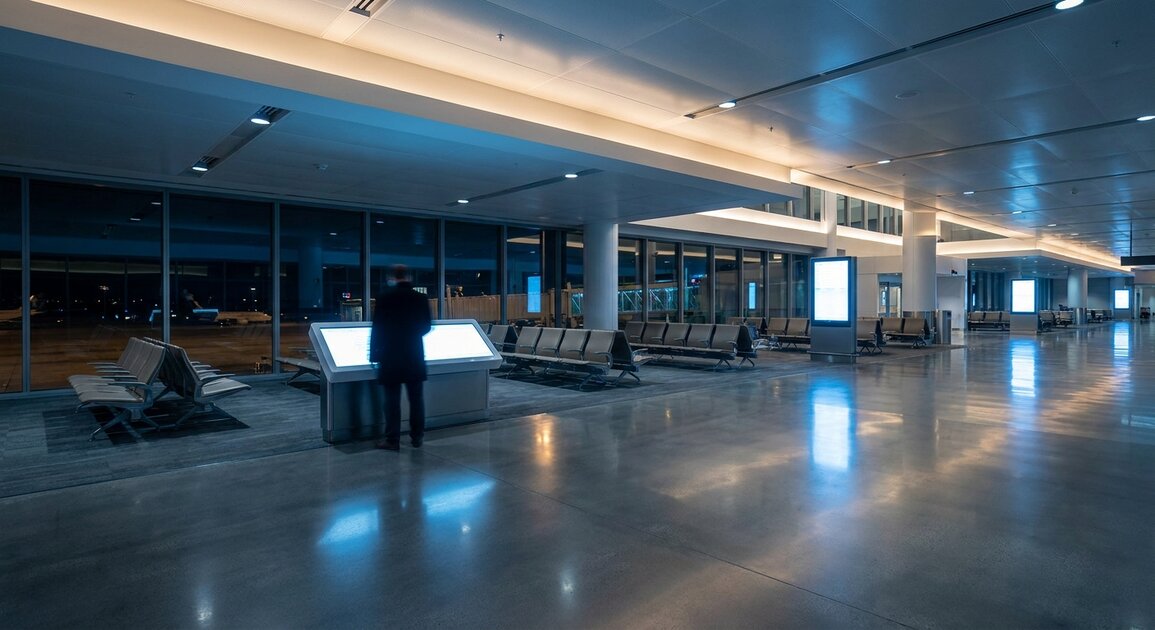
The terminal does not become simpler after midnight. Its operating rhythm changes. Fewer staffed service points may be open. A traveler may need a restroom, clear directions, or a person who can explain a change. The airport still owns the experience inside its space.
An overnight feedback plan should reflect that different rhythm. Not more dashboards. A small number of relevant touchpoints, clear ownership for the shift, and a route from a passenger signal to a human response. FeedbackNow makes that signal visible in real time.
Design for the actual overnight journey
Start with a walk through the terminal during the hours the plan will serve. Identify which routes are open, where travelers wait, and which teams are physically available. A daytime service map may not describe the overnight operating pattern. Do not assume it does.
Look at the sequence from arrival or check-in to gate, and from arrival gate to exit. The exact path differs by airport and schedule. The useful unit of analysis is the accessible touchpoint, not the average sentiment of the entire building.
The Transportation Security Administration projected 44.3 million people through U.S. checkpoints between December 19, 2025, and January 4, 2026. That projection covered a national holiday period, not overnight traffic at a particular airport. Its relevance is operational: demand can concentrate across unusual hours, so local teams need a view of the experience they are actually delivering.
Observe before installing a feedback prompt. A question that works near a busy daytime queue may be irrelevant at a quiet late-night gate. Ask what a traveler can reasonably report and what the on-duty team can actually change.
Make the shift owner unmistakable
Overnight operations may involve fewer people covering a wider area. That makes ownership more important, not less. A signal from a remote restroom, a transfer corridor, or a waiting area needs a route to a person who can take an appropriate next step.
Define the owner by location and issue. Facilities may handle a cleanliness need. An airport operations representative may check a confusing route or coordinate with the appropriate partner. Airline questions belong in the right airline channel. A real-time feedback system helps identify and route the experience concern; it should not claim authority it does not have.
Give the owner a backup and a practical escalation path. Specify what can be resolved immediately and what should be recorded for the next shift. A traveler who needs help now should not be treated as a morning report. A pattern requiring capital work should not be mislabeled as an immediate fix.
Keep the signal simple enough to use
Overnight travelers may be tired or pressed for time. Offer a brief feedback choice at an appropriate point, with a clear way to request help when human assistance is available. Keep sensitive information out of public-facing channels. Make the touchpoint identifiable so the recipient does not have to guess where to go.
FeedbackNow can connect that location-specific signal to the operational team. It can also help leadership distinguish recurring friction from a one-off comment. The platform supports responsiveness. Staff deliver the reassurance, explanation, or service recovery.
Do not measure success by counting taps alone. Ask whether actionable signals reached an owner during the shift, whether the team responded within its stated process, and whether the same issue recurred at the same location. Check findings against staff observations and operating logs.
The Federal Aviation Administration's airport signing and graphics guidance addresses terminal and landside wayfinding. For overnight operations, a sign can remain in place while the staffed route around it changes. Use feedback and direct observation to verify that the intended path is clear at the hours passengers use it.
Close the loop across the handoff to morning
Some issues can be handled in the moment. Others require a change to staffing, signage, or an agreed partner workflow. Capture both. The overnight team should be able to identify what it addressed, what remains open, and what evidence supports a next-step review.
Use a short handoff format: location, issue, action taken, owner, next check. Avoid turning it into a long narrative. If a repeated signal emerges near the same touchpoint, the morning team can test a specific change instead of rediscovering the problem.
Run a pilot on one overnight route. Agree on which signals matter, who receives them, and which actions are within that team's control. Review with the staff who worked the shift. Then adjust placement and routing. This is operational design, not an exercise in collecting more opinions.
The airport's day and night teams serve one passenger journey. A feedback program should do the same. It should reveal friction while a traveler can still benefit from a response and carry learning into the next shift without losing accountability.
The Bottom Line
Give the overnight terminal a feedback plan built for its own operating pattern. Connect a clear signal to the shift owner, act where possible, and carry unresolved work into a precise morning handoff. Learn how FeedbackNow helps airport teams respond in real time.
Contact us to learn more about how FeedbackNow can help improve your customer experience and operations!