Airports are removing human contact from the passenger journey. That was the plan.
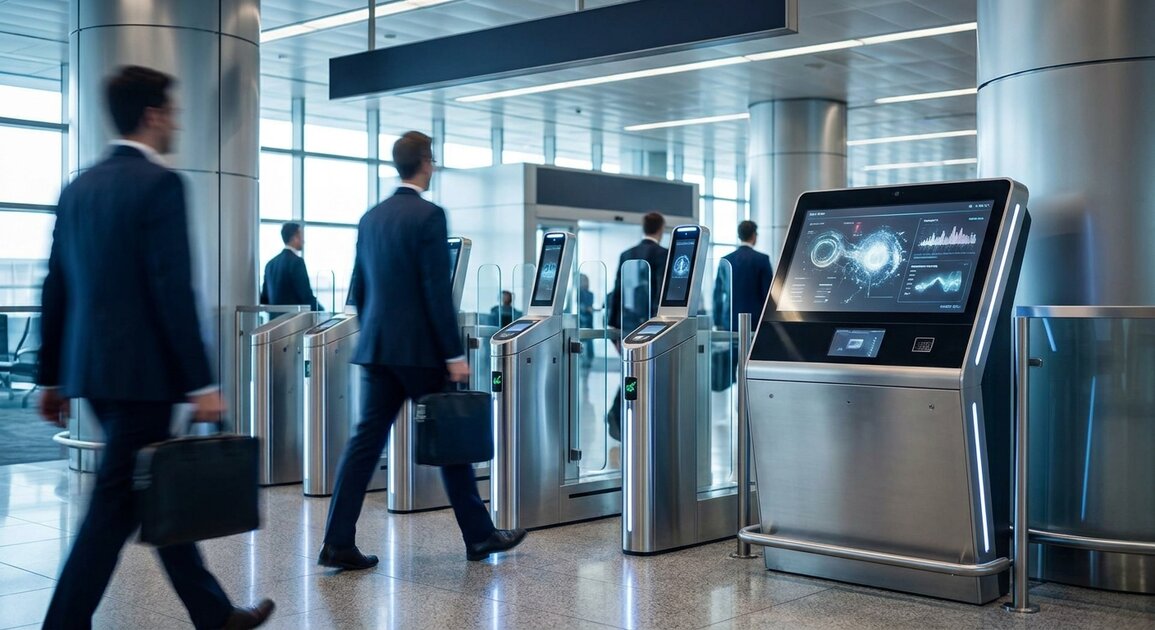
Biometric boarding, mobile IDs, and self-service kiosks are replacing the agent who used to check a passport, print a tag, or wave someone toward the right gate. Every one of those interactions was also, quietly, a moment where an airport could sense how a passenger was doing.
Remove the interaction, and you don't just remove friction. You remove a feedback opportunity that used to happen for free.
Biometric Adoption Is Accelerating, Not Slowing
This isn't a future trend. It's the present operating reality for a growing share of passengers.
50% of passengers globally have now used biometrics at some point in their airport journey, up from 46% just a year earlier (IATA Global Passenger Survey, 2025). Adoption is moving in one direction, and it is not reversing.
Passengers like it. Satisfaction among biometric users is high, and airports have every reason to keep expanding it. None of that is in question.
What Gets Lost When the Agent Disappears
A staffed checkpoint was never just a security or processing function. It was a place where a tired traveler could ask a question, where a frustrated one could visibly show it, and where a staff member could sense friction building before it turned into a complaint.
A biometric gate doesn't do any of that. It reads a face, opens a lane, and moves on. Efficient, and silent about everything except throughput.
As more of the journey shifts to self-service and biometric flows, airports are automating away the informal signal they used to get for free — without replacing it with anything else.
The Measurement Gap Compounds With Adoption
The gap doesn't stay fixed. It grows exactly in proportion to biometric adoption.
At 46% adoption a year ago, a majority of passengers still moved through a checkpoint with some human interaction attached. At 50% and climbing, the balance is tipping. An airport measuring passenger sentiment the way it did five years ago is now missing feedback from a passenger population that keeps getting larger.
This is a structural shift, not a temporary adjustment period. As more airports and airlines adopt biometric and mobile-ID flows, the share of the journey with zero built-in feedback moment only increases.
Real-Time Feedback Was Never Dependent on a Human Interaction
This is where a dedicated real-time feedback layer has an advantage a staffed checkpoint never had in the first place: it doesn't need an agent to prompt it.
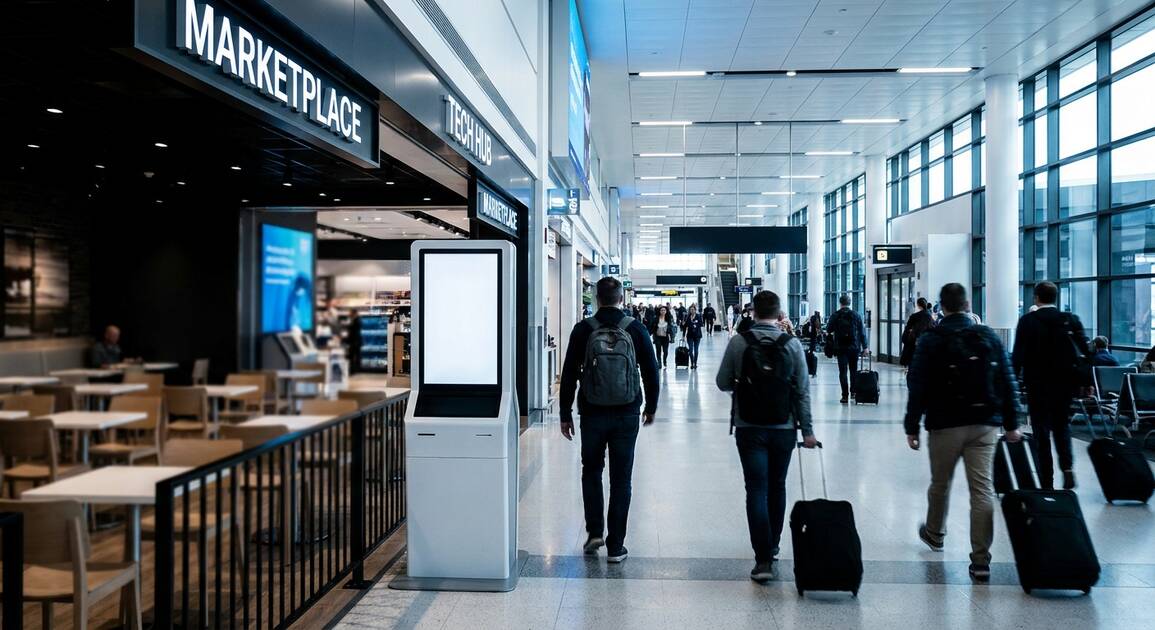
A device or prompt placed just past a biometric gate captures sentiment the moment a passenger clears it — automated flow in, human-readable signal out. The passenger still gets the speed biometrics promised. The airport still gets a feedback moment, just relocated from an agent's intuition to a designed touchpoint.
That's a direct swap: automation removes an informal signal, and a deliberate feedback touchpoint replaces it with a better one — timestamped, location-specific, and aggregated across every passenger who passes through, not just the ones who happened to visibly react in front of a staff member.
A Major Hub Airport's Version of This Shift
A major hub airport rolling out biometric boarding across multiple terminals faces this at scale. Each lane converted to biometric processing is a lane that no longer generates the informal read a staffed lane used to provide.
For a hub airport processing tens of thousands of passengers a day through these lanes, that adds up to a meaningful and growing blind spot — unless a real-time feedback touchpoint is designed into the automated flow from the start, not added later as an afterthought.
Convenience and Measurement Aren't in Tension
Nothing about this argues against biometric adoption. Passengers want it, and it works.
The argument is narrower: automation and measurement have to be designed together. An airport that treats feedback infrastructure as separate from its digital identity rollout will find itself with a faster journey and a growing hole in what it actually knows about how that journey feels.
Design the Signal In, Not On Top
Retrofitting feedback onto an already-automated flow is harder than designing it in from the start. A touchpoint added after the fact tends to feel like an interruption to the very speed the biometric lane was built to deliver.
A touchpoint designed alongside the automation — a single prompt just past the gate, a QR code on the signage guiding passengers through the lane — becomes part of the flow instead of a tax on it. Passengers barely notice it. Operations teams get a signal they otherwise would have lost entirely.
Airports planning their next terminal upgrade or biometric expansion have a narrow window to build this in from day one, rather than trying to bolt it on once the lane is already live and passenger habits are already set.
The Journey Got Faster. The Signal Doesn't Have to Disappear.
A feedback touchpoint placed at the right point in a biometric flow costs an airport almost nothing in passenger time. It costs a great deal in blind-spot risk if it's left out.
The Bottom Line
As airports go biometric, the human moments that used to double as feedback opportunities are disappearing — automated away along with the friction.
Real-time feedback, designed into the automated journey itself, keeps the signal alive even as the human contact point disappears.
See how real-time feedback keeps pace with airport automation →
Contact us to learn more about how FeedbackNow can help improve your customer experience and operations!