Why RTLS Is Now Mission-Critical
Hospitals are increasingly adopting Real-Time Location Systems (RTLS) to gain visibility into:
- Medical equipment (beds, wheelchairs, pumps)
- Staff movement and workflows
- Patient flow across departments
- Inventory and supply chain operations
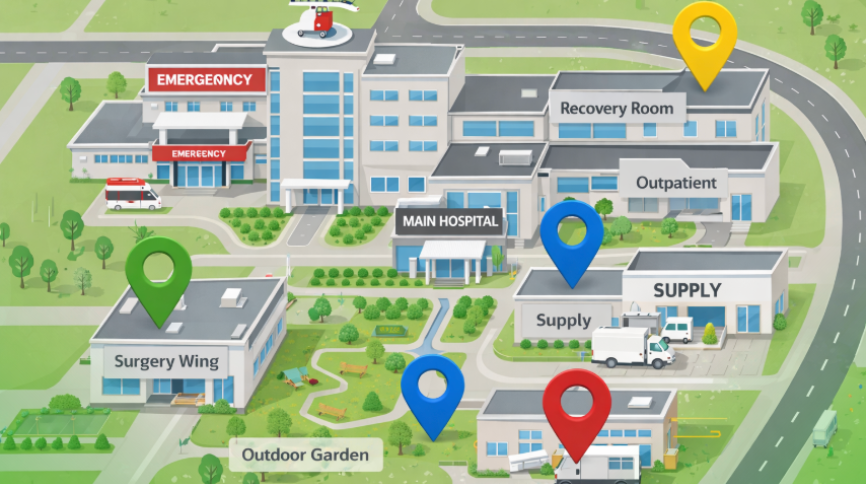
With technologies like BLE, RFID, GPS, and hybrid networks, RTLS enables room-level and cross-campus tracking in real time.
But visibility alone is not enough.
The Cost of Operational Blind Spots
Hospitals operate in a high-cost, high-pressure environment where inefficiencies directly impact outcomes.
According to McKinsey & Company and Deloitte:
- Operational inefficiencies can represent 10–15% of total hospital costs
- Asset mismanagement contributes to delays, waste, and unnecessary spending
RTLS answers key questions:
- Where is the asset now?
- Is it in ICU, recovery, surgery, or outpatient?
- When did it arrive or leave?
- How long has it been there?
But it doesn’t explain why problems occur.
The Gap Between Data and Action
RTLS provides location data.
Hospitals need real-time insight and actionability.
Knowing:
“A hospital bed is in the hallway”
Does not answer:
“Why has it been there for 45 minutes - and is it delaying patient care?”
FeedbackNow + RTLS: A Complete Real-Time Solution
Integrating FeedbackNow with RTLS creates a powerful operational intelligence layer.
1. Close the Loop in Real Time
- Staff report issues instantly at the point of care
- Alerts combine location data with real-time feedback
- Issues are resolved immediately— not hours later
2. Enhance RTLS Investments
FeedbackNow adds:
- Human-centered insights
- Service quality validation
- Continuous performance monitoring
3. Improve Throughput and Efficiency
- Reduce time spent locating equipment
- Optimize asset distribution
- Improve patient flow and reduce delays
Key Use Cases for RTLS + Real-Time Feedback
Patient Flow Optimization
- Where are delays occurring?
- How long are patients waiting for beds?
Asset Utilization
- How many assets are available vs. in transit?
- Are assets concentrated in the wrong areas?
Inventory Monitoring
- Are supplies and pharmaceuticals where they need to be?
- Were environmental conditions maintained during delivery?
Perimeter and Outdoor Tracking
- Where is the wheelchair in the outdoor garden?
- Alert when assets leave hospital property
Building a High-Impact RTLS Strategy
Use Case Discovery
Identify high-value assets and operational pain points
Business Value & ROI Analysis
- Labor productivity improvements
- Reduction in asset loss
- Increased throughput
Operational Constraints
- Facility size and layout
- Wireless interference
- Physical barriers
Technology Approach
- BLE (room-level accuracy)
- RFID (inventory tracking)
- GPS/cellular (outdoor tracking)
- LoRaWAN (long-range coverage)
- Hybrid models for cross-site visibility
From Location Visibility to Intelligent Operations
RTLS answers: Where is everything?
FeedbackNow answers: What needs attention right now?
Together, they enable:
- AI-driven decision making
- Real-time operational optimization
- Continuous improvement across hospital systems
The Future of Smart Hospitals
Hospitals are evolving into intelligent, responsive environments where:
- Assets are always visible
- Staff are always informed
- Issues are addressed in real time
By combining RTLS with real-time feedback solutions, healthcare leaders can achieve:
- Better patient experiences
- Higher staff productivity
- Lower operational costs
Final Thought
Hospitals that move beyond tracking - and into real-time operational intelligence - gain a measurable advantage.
Because in modern healthcare, every second, every asset, and every patient experience matters.
Contact us to learn more about how FeedbackNow can help improve your customer experience and operations!