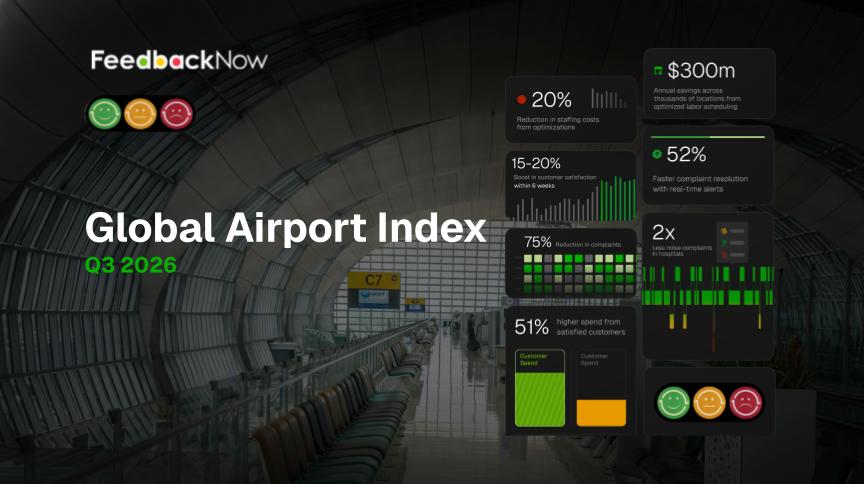
If daily issues feel unpredictable, recurring, or expensive to solve, you may be missing the real-time visibility that modern operations demand.
Operations leaders are problem-solvers by nature - but even the strongest teams struggle when they can’t see issues as they’re forming. Many organizations rely on delayed surveys, periodic inspections, or manual reporting. The problem? These approaches capture issues after they’ve already disrupted the customer experience, increased labor costs, or created reputational damage.
Across airports, hospitals, retailers, and venues, the same early warning signs appear. When leaders start noticing these signals, they often turn to real-time feedback paired with predictive analytics to regain control.
Here are the operational red flags that suggest it’s time to modernize.
1. Too Many Issues Are Being Found “Too Late”
If your team learns about problems after customers complain publicly - or after conditions have deteriorated - your visibility window is too slow.
Signals include:
- Dirty restrooms discovered after multiple complaints
- Queue backups that staff weren’t aware of
- Service delays only uncovered through negative reviews
- Equipment issues that linger because no one reported them
Real-time feedback alerts operations the moment conditions change.
2. You’re Running in Reactive Mode, Not Predictive Mode
When teams spend most of their time responding to problems instead of preventing them, costs rise and morale dips.
Common signs include:
- Constant firefighting
- Repeat issues across the same shifts or zones
- Inability to staff proactively
- Maintenance teams overwhelmed by sudden bursts of requests
FeedbackNow’s AI models help shift operations from reactive to prediction-driven, reducing waste and improving stability.
3. You Suspect Issues Are Happening… But Can’t Prove Where or Why
You’ve heard complaints. You’ve seen inconsistent performance. But the root cause is unclear.
Red flags:
- Some shifts run smoothly while others don’t
- Problem areas differ depending on who is on duty
- You hear anecdotal issues but lack data
- Leaders ask for reports you can’t generate confidently
Real-time sentiment and contextual signals create operational clarity.
4. Customer Behavior Doesn’t Match Your Staffing Model
This is one of the biggest triggers for operational leaders.
Signs include:
- Cleaning teams arrive before or after the real rush
- Staffing is misaligned with actual foot traffic
- High-demand zones have slow response times
- You’re either overstaffed or understaffed-not optimized
Predictive analytics help match staffing to actual demand - and reduce operational cost.
5. You’re Seeing More Negative Reviews Than You Think You Deserve
This often signals an unseen operational problem.
Examples:
- Reviews about cleanliness that don’t match your audits
- Complaints about wait times you didn’t witness
- Comments about staffing that contradict schedules
When public sentiment surprises you, it’s time for real-time insight.
6. Teams Are Working Hard - but You Still Don’t Know Why Experience Is Inconsistent
This may be the most frustrating operational signal.
Real-time feedback exposes:
- Shift-level differences
- Building or floor-level inconsistencies
- Peak periods that weren’t anticipated
- Environmental factors affecting flow
The truth is simple: what gets measured in real time gets managed in real time.
If these signals sound familiar, you’re not alone.
Organizations that adopt real-time feedback gain visibility, reduce cost, improve efficiency, and create consistency across every shift and every location.
Contact us to learn more about how FeedbackNow can help improve your customer experience and operations!